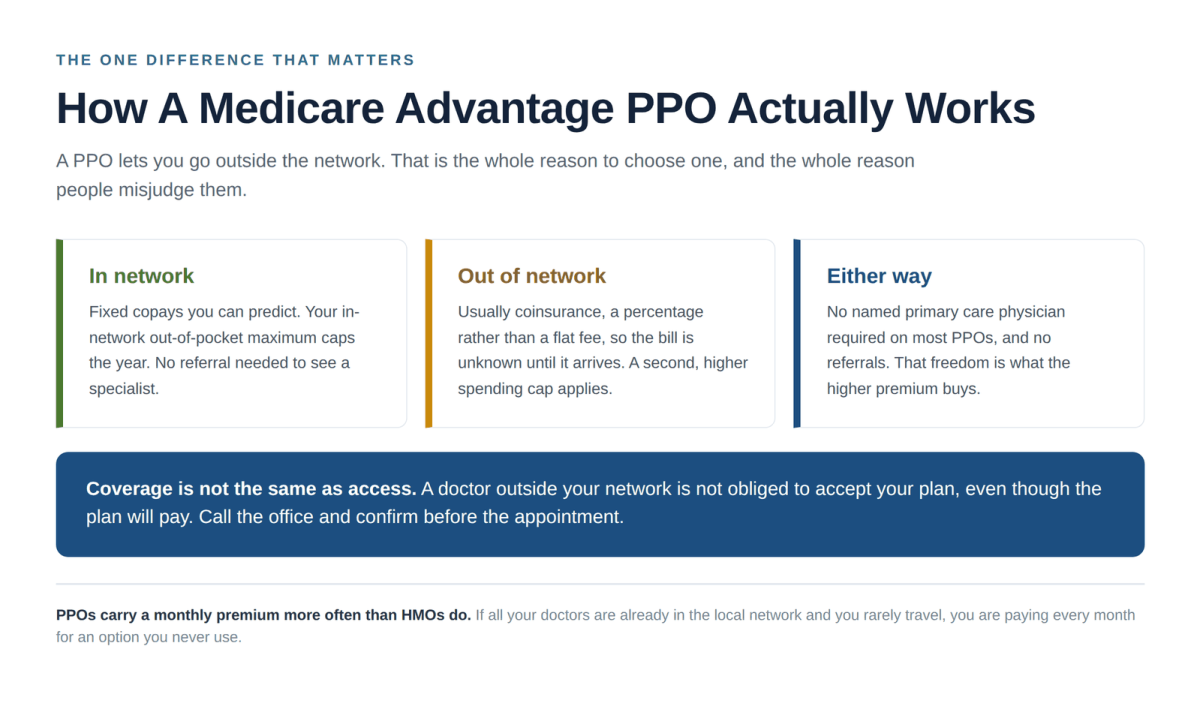
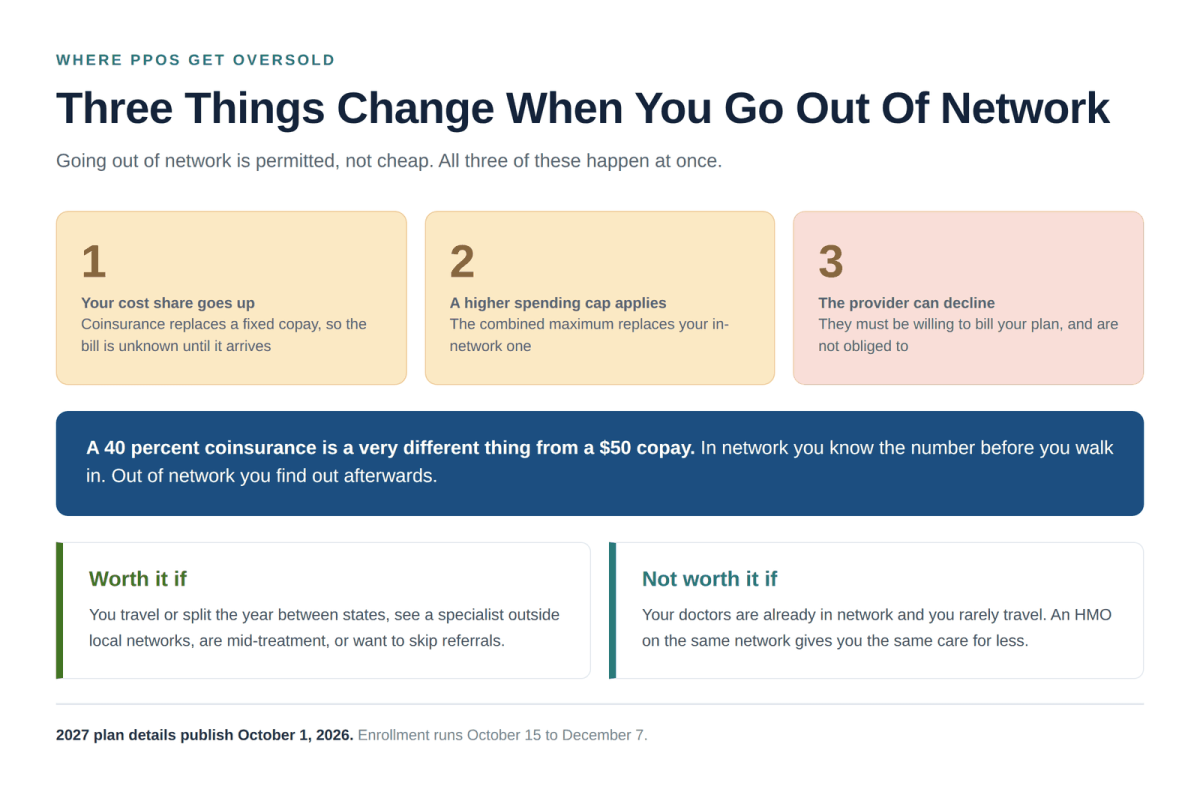
This is where PPOs are oversold. Going out of network is permitted, not cheap, and three things change at once when you do.
Your cost share goes up
In-network you typically pay a fixed copay. Out-of-network you usually pay coinsurance, a percentage of the cost, which means you do not know the bill until it arrives. A 40 percent coinsurance on a procedure is a very different thing from a $50 copay.
A second, higher spending cap applies
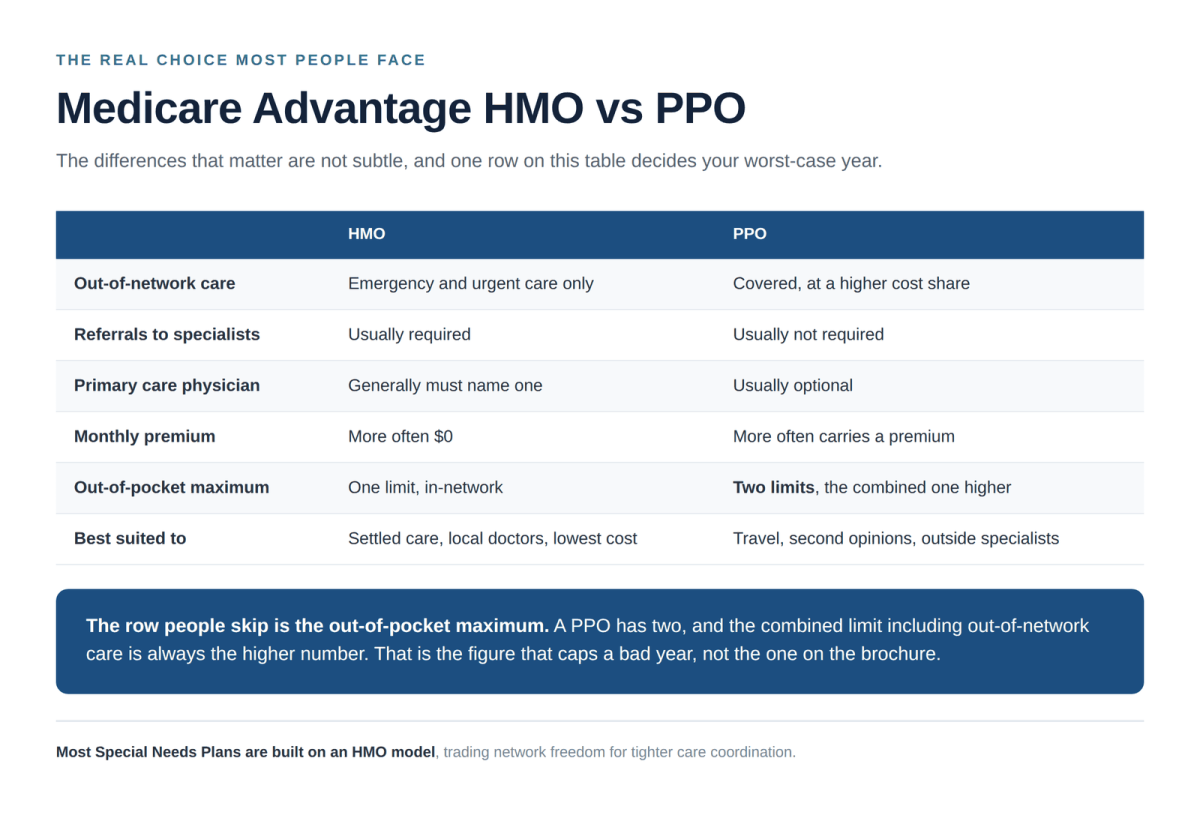
Your in-network out-of-pocket maximum no longer protects you on its own. The combined maximum, covering in and out-of-network together, is the one that caps your year, and it is materially higher on every PPO.
The provider can decline
A doctor outside the network is not obliged to accept your plan, even though the plan will pay. They must be willing to bill it. Call and confirm before the appointment rather than assuming coverage equals access.
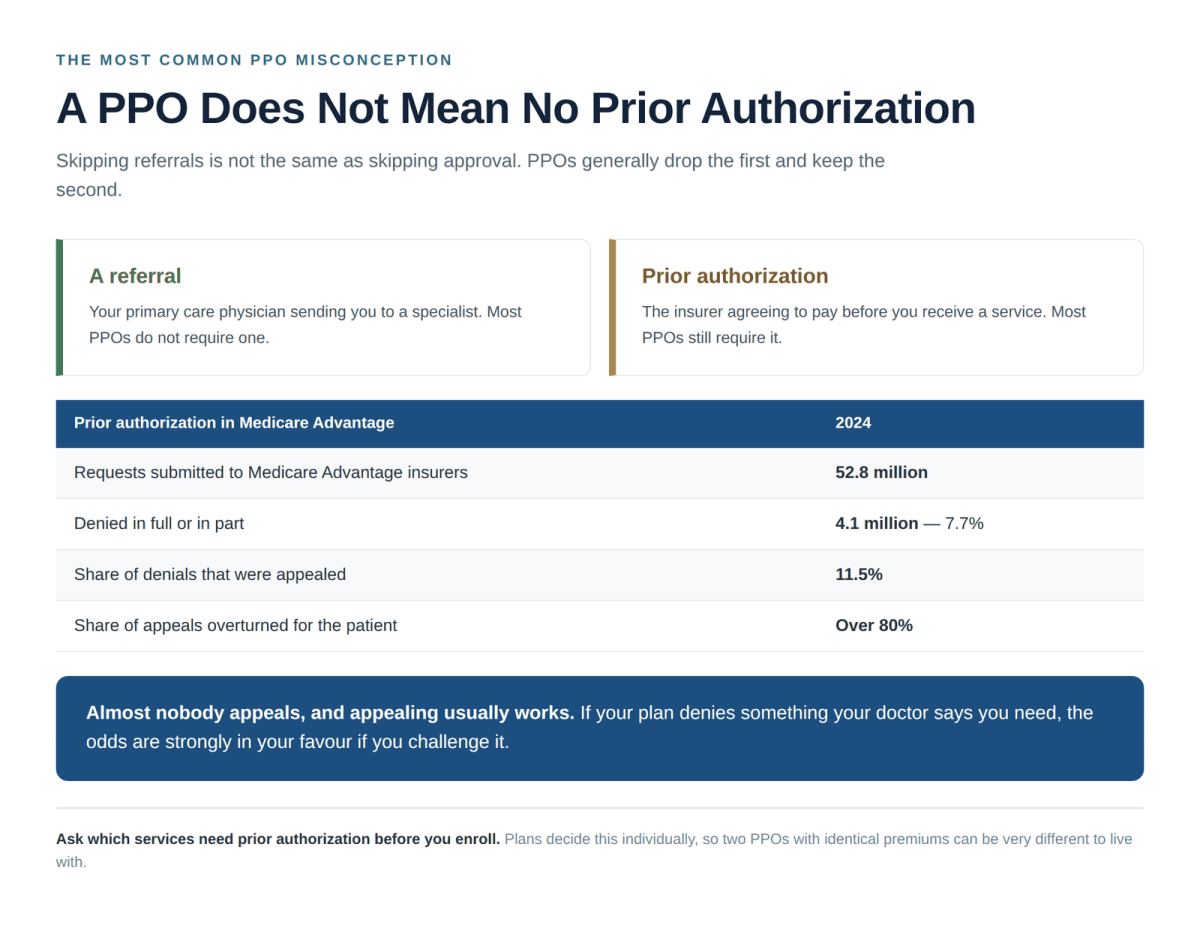
This is the most common misunderstanding about PPOs. Skipping referrals is not the same as skipping approval. A referral is your primary care physician sending you to a specialist. Prior authorization is the insurer agreeing to pay before you receive a service. PPOs generally drop the first and keep the second.
Most Medicare Advantage plans, PPOs included, require prior authorization for higher cost services: hospital stays, skilled nursing facility care, advanced imaging such as MRI and CT, many outpatient procedures, and durable medical equipment. Routine office visits usually do not need it.
| Prior authorization in Medicare Advantage |
2024 figure |
| Requests submitted to Medicare Advantage insurers |
52.8 million |
| Denied in full or in part |
4.1 million, or 7.7 percent |
| Share of denials that were appealed |
11.5 percent |
| Share of appeals overturned in the patient’s favour |
More than 80 percent |
Two things follow from that table. Denials are uncommon but not rare, and almost nobody appeals them even though appealing works most of the time. If your PPO denies something your doctor says you need, the odds are strongly in your favour if you challenge it.
Before you enrol, ask the plan which services require prior authorization. Plans decide this individually, so two PPOs with identical premiums can be very different to live with.
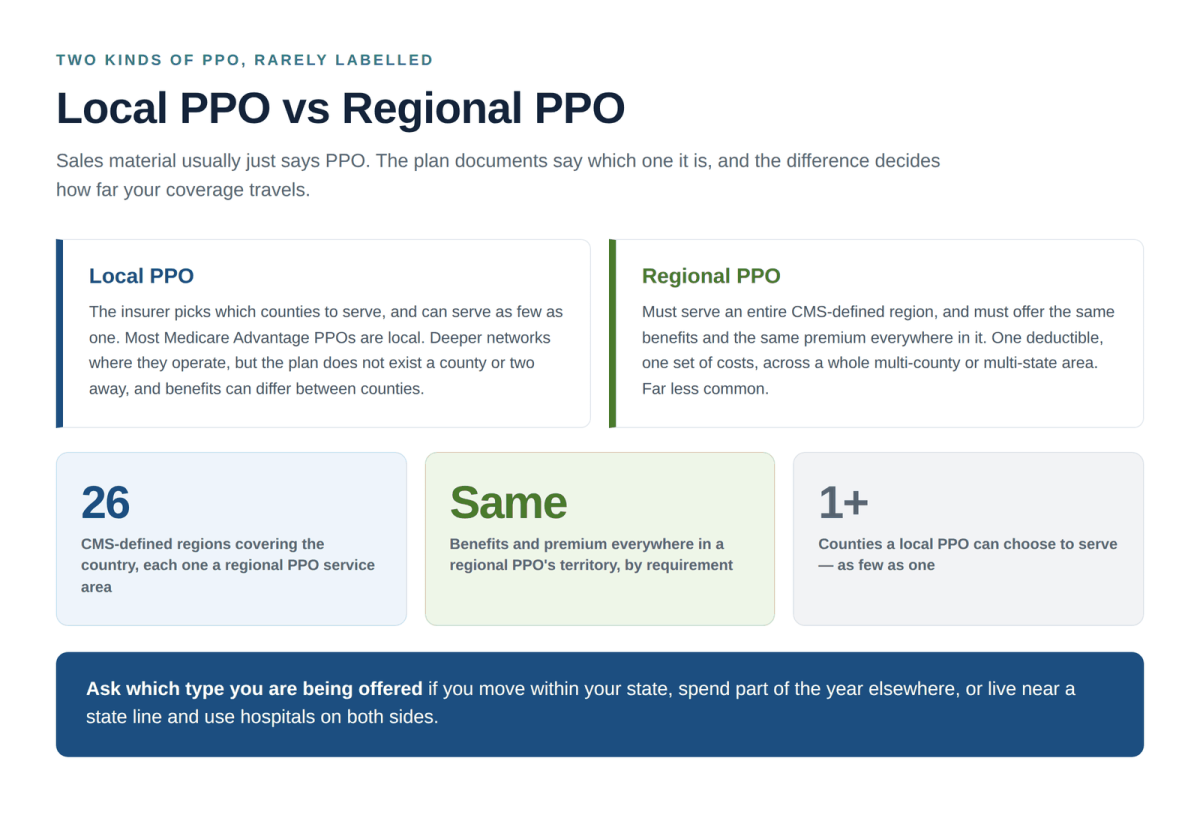
There are two kinds of Medicare Advantage PPO and they are not labelled clearly in most plan listings. The difference decides how far your coverage travels.
Local PPO
The insurer picks which counties to serve, and can serve as few as one. Most Medicare Advantage PPOs are local PPOs. Networks tend to be deeper where they operate, but the plan simply does not exist a county or two away, and benefits can differ between the counties one insurer serves.
Regional PPO
Must serve an entire CMS-defined region, of which there are 26 covering the country, and must offer the same benefits and the same premium everywhere in that region. That uniformity is the point: one deductible, one set of costs, across a whole multi-county or multi-state area. Regional PPOs are far less common than local ones.
If you move within your state, spend part of the year elsewhere, or live near a state line and use hospitals on both sides, it is worth asking which type you are being offered. Plan documents use the terms Local PPO and Regional PPO, but sales material usually just says PPO.