If it seems like star ratings have been sliding for several years, that is because they have, and it is mostly not because plans got worse. CMS tightened how the scoring works. The thresholds a plan has to clear for each star level are recalculated every year against how everyone else performed, so as the industry improved, the bar rose with it. A plan can post identical numbers two years running and lose half a star.
CMS also changed how it handles statistical outliers when setting those thresholds, and restored the full weighting of the member survey measures after temporarily reducing them during the pandemic years. Both changes pushed ratings down across the board. The practical effect is that a 4-star plan today cleared a higher bar than a 4-star plan did five years ago.
What this means when you compare years
Comparing a plan’s 2027 rating to its 2024 rating is not comparing like with like. Compare plans against each other in the same year instead, which is the comparison the rating is actually built to support.
There is a second consequence that matters more to carriers than to you, though it eventually reaches you. Because the bonus payment threshold sits at 4 stars, a plan slipping from 4.0 to 3.5 loses a substantial revenue stream in one step. That is why you sometimes see a plan’s benefits shrink sharply in a single year rather than gradually.
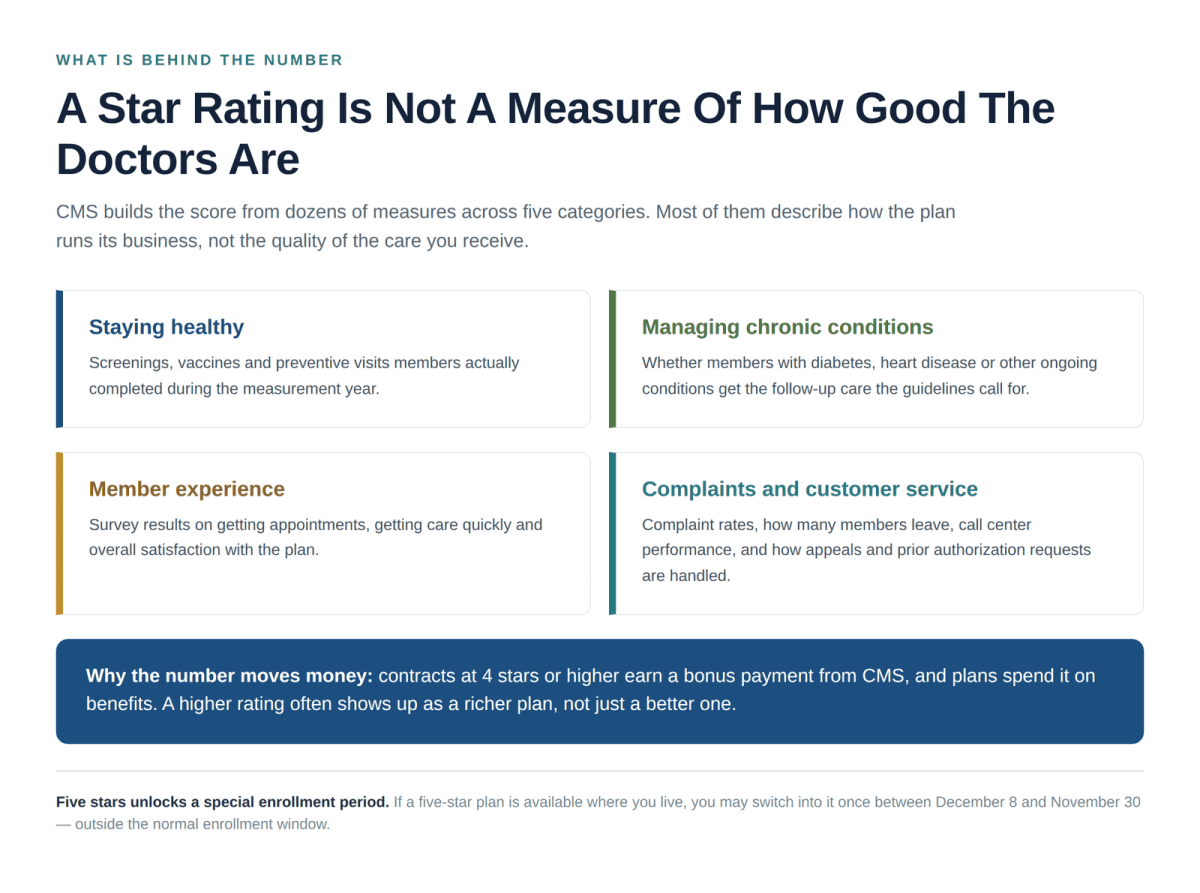
CMS builds the score from dozens of individual measures across five categories. Most of them describe how the plan runs its business rather than how good your doctor is, which is the single most common misunderstanding about star ratings.
- Staying healthy — the screenings, vaccines and preventive visits members actually completed during the measurement year.
- Managing chronic conditions — whether members with diabetes, heart disease and similar conditions received the follow-up care the guidelines call for.
- Member experience — survey results on getting appointments, getting care quickly, and overall satisfaction with the plan.
- Member complaints and plan performance — complaint rates, how many members leave, and problems CMS identified with the plan directly.
- Customer service — call center performance, and how the plan handles appeals and prior authorization requests.
That last category is the one worth paying attention to. How a plan handles appeals and authorizations is a genuine day to day experience issue that appears nowhere in a benefits summary, and it is one of the few places the star rating tells you something you could not otherwise find out.